
1
We find the tight, restricted tissue in your evaluation.
For the knots that stretching, foam rolling, and time alone never touch: a precise release you can feel before you leave the room.
What It Is
Cupping places small suction cups on the skin over tight, restricted soft tissue. Instead of pressing down like a massage, the cup lifts and decompresses the area, drawing blood flow toward the surface and giving stuck tissue room to move again.
The technique has roots in traditional Chinese medicine and has been around for centuries, but it’s gotten far more visible in recent years thanks to Olympic swimmers and other elite athletes showing up with the telltale circular marks. What’s changed is the context: here, it’s used as a soft-tissue mobility and recovery tool inside a bigger plan, guided by what your evaluation actually found.
Cupping is an adjunct, not a stand-alone fix. It works alongside your plan of care to help release restriction and keep blood flow moving between visits, so the exercises and hands-on work doing the real change can take hold faster.
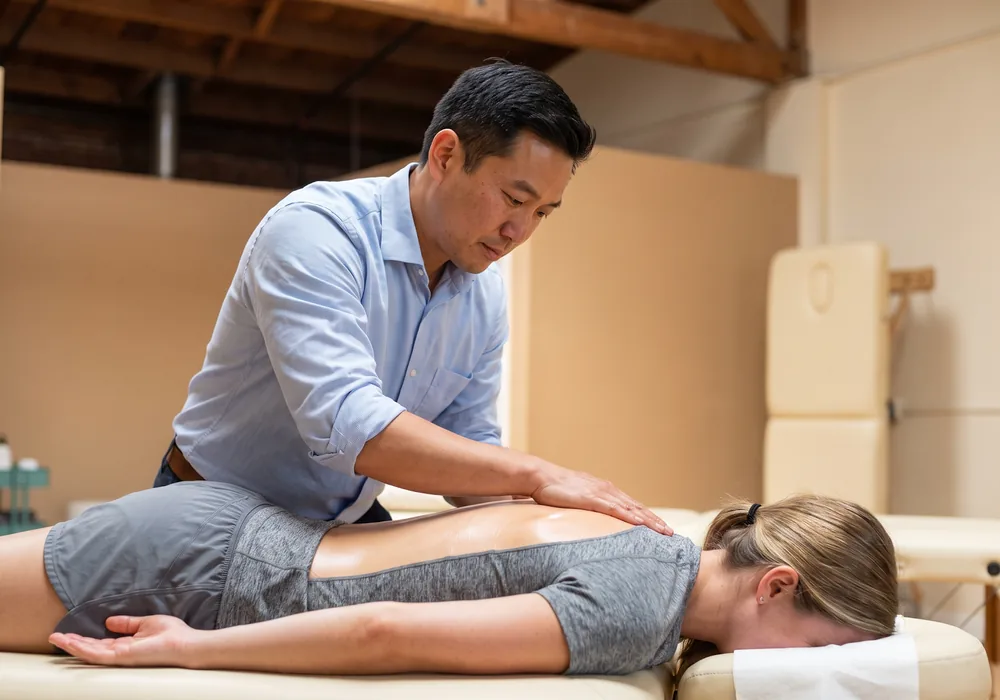 A complement to your plan, not a stand-alone fix
What It Helps
If tissue is tight and slow to respond to hands-on work alone, added blood flow can be exactly what it needs to let go.
What A Session Looks Like
1
We find the tight, restricted tissue in your evaluation.
2
Cups go on, suction lifts the area and gets blood moving.
3
You move into your exercises while the tissue is loosest.
Why It Works
Increases local blood flow to tight tissue.
Helps release restriction that’s slow to respond to hands alone.
Adds just a few minutes to a visit you’re already having.
Works alongside your plan, never replaces it.
Pairs Well With
Questions, Answered
Most people describe the suction as a pulling sensation, not pain. It can leave circular marks where the cup sat, similar to what you may have seen on athletes. They’re painless and fade over a few days, and we’ll walk you through what to expect before we place the first cup.
Cupping is typically added into a covered physical therapy visit rather than billed as its own service, so it usually doesn’t change what you owe. We verify your exact benefits before your first session, so there’s no surprise on your bill.
No. Cupping helps loosen tight tissue and gets blood flow moving, but it doesn’t address why that tissue got tight in the first place. We use it alongside a full plan of care, never as a stand-alone fix. Questions before then? Call us at (209) 207-0849.
Book Your Visit
Request a time and a real person calls you back, usually within two business hours. No phone tree. No ‘someone will reach out.’ Just a plan.
4.9 · 367+ Google reviews
Typical response: under 2 business hours
Step 1 of 5
That’s the hard part done. We’ll call during business hours to lock in your time. Most people are on the schedule same week.
Visit Us